Blog

  • A Letter From Sweden: Finding Kiswahili in a Cold Climate

    A Letter From Sweden: Finding Kiswahili in a Cold Climate

    Winter here isn’t just cold. It presses down on you. Gray sky. White ground. Sun barely shows up. January in Sweden, the air cuts your lungs the second you step outside.

    You bundle up. Wool. Down feathers. Just your eyes showing.Walking through snow last Tuesday, something hit me. The coldest part of being far from home isn’t the wind. It’s not hearing your own language.

    Language wraps around your thoughts. When I speak Swedish at the store or English at work, I’m wearing a public coat. Polite. Efficient. People understand me. But I’m not fully me. My heart beats different when Kiswahili hits my ears.

    That’s the language of being little. Of my people before me. It holds the warmth I left behind.Finding Kiswahili here? Like spotting a diamond in ice.

    First time it happened on a bus. I sat by the window. Frozen trees outside. That heavy chest feeling nothing here can fix. Then from behind me, three rows back, a sound cut through. Not just words. The music of it.

    The rise and fall.”Sema kaka, mambo vipi?“Hit me like heat. My head snapped around before I knew I’d moved. Two men talking. They had no clue they just pulled me out of a hole.

    The bus didn’t feel so gray after that. Swedish quiet cracked open by home noise. I didn’t know those men. But those words? Made them family. That’s Undugu. Brotherhood living in how we shape our sounds.

    I’ve learned something here. You have to work to keep your language alive. Let it sit too long, it gathers dust in your head. You forget the slang. The way a proverb lands just right.

    That’s why my little apartment became a Kiswahili spot. Cooking dinner, trying to make kale act like sukuma wiki, I play music from back home. I did call my people not just for news. To wash my ears in the sounds I need.Something else too.

    Out here, they judge how you speak their language. Your Swedish has an accent, they figure your brain does too. Talk slower at you. Assume you don’t get complicated things. Makes you feel small. But slide back into Kiswahili? I’m big again.

    Words come easy. Funny. Sharp. Daughter of something that stretches across oceans.I think about this Story Hub I want to build. Reach a hundred thousand people in a few years. People ask why Kiswahili. Why not English so more folks get it.

    Here’s why. Kiswahili builds bridges that get stronger every day. It’s national language in more places now. Tanzania. Others. Going global. Using it doesn’t shrink us. Plants us in the big conversation.

    Says our stories matter in the sounds that made them.Being a polyglot out here gets lonely certain ways. Kiswahili from birth. English from school. Swedish because I need it. German creeping in now.

    Like rooms in a house. Some stay locked. Nobody to visit them with you. Meet another African in Europe, we start polite. English? In Sweden we go English or Swedish? Then the look passes between us. Silent question.

    Someone drops a Kiswahili word. Walls fall. Posture shifts. We stop being immigrants. Start being people. Talk about the shamba. Politics back home. Laugh deep. That belly shake Swedes find too loud for public.

    Taught me something real about fitting in. Some think fitting in means shedding who you were. Becoming just like them. I see it different. Be a bridge. I can appreciate their Lagom. That just enough thing.

    Still carry Kiswahili abundance. Follow their road rules. Sing songs from the coast.To my people back home. Don’t sleep on your language. You breathe sounds you love every day. You don’t have to hunt for your mother tongue.

    Out here? Every Hujambo prays something. Every Asante remembers.Sun sets at three here. Dark creeps in. I turn my lamp on. Write. Simple English so you can read this. But my head thinks in home rhythm.

    Snow falls outside my Sweden window. Inside though? The words I carry make it summer.We’re not just bodies crossing borders.

    We’re libraries on the move. Songs walking around. Long as we keep speaking. Keep sharing these letters in languages that hold us. The cold can’t win all the way.

  • Voices: “Why I stopped voting”

    Three voters from three different generations explain why they have lost faith in the Riksdag.

    Örebro, Sweden – Think of the queue at a Swedish polling station. It is usually long, silent, and dutiful.

    For decades, voting was not a choice; it was a civic reflex. To be Swedish was to vote.Now, picture the spaces where the queues are gone.

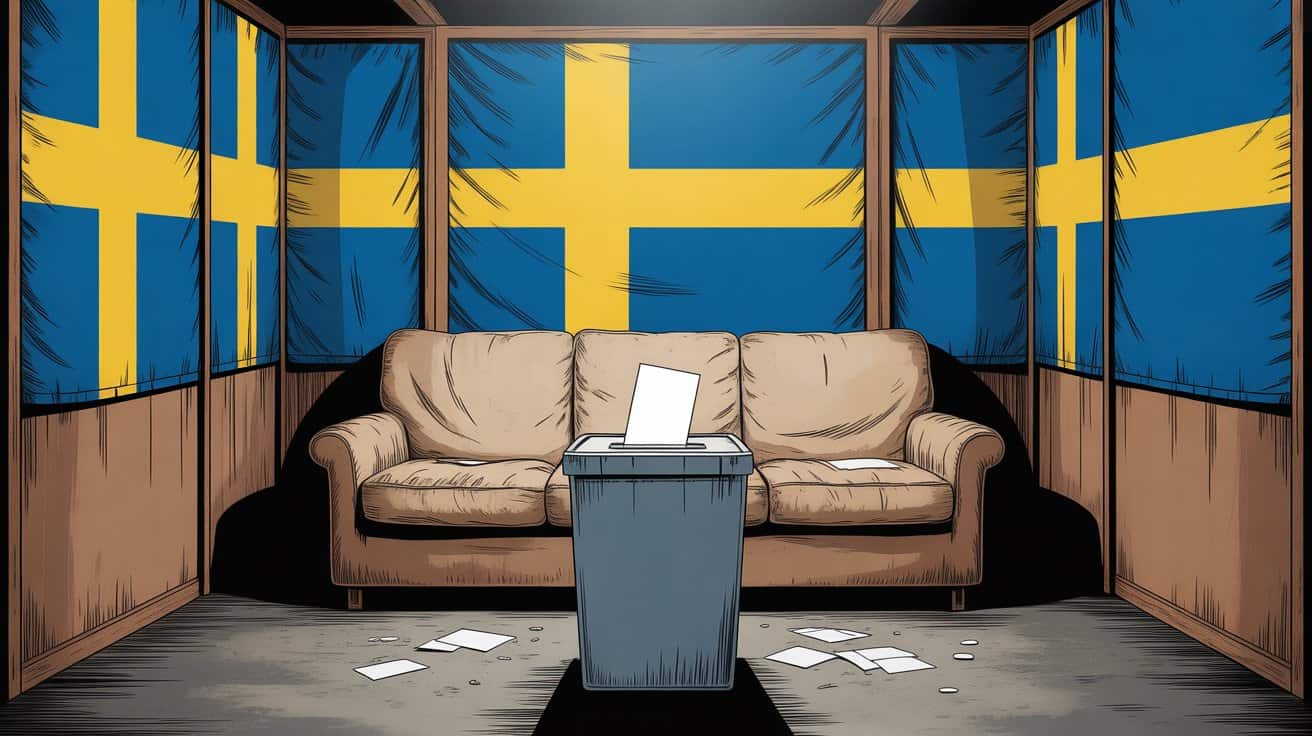
    In the concrete courtyards of the “Million Program” suburbs, or the quiet gravel driveways of the rural interior, a new silence is growing. It is the silence of the soffliggare—the “couch sitters.” But they are not lazy.

    They are protesting.This shift has a name: demokratiskt utanförskap (democratic exclusion).

    It is not apathy; it is an active rejection of a system that many feel has rejected them.

  • The Silent North

    Rural Abandonment in Västerbotten.

    Västerbotten, Sweden – Think of the classic image of Northern Sweden. It was a place of busy forestry roads and small, sturdy villages.

    Every municipality had a police station. Every village had a school. The “folkhemmet” (the people’s home) extended all the way to the Norwegian border.Now, picture the interior today.

    The roads are quiet, save for massive logging trucks taking timber to the coast. The windows in the village centers are dark. The police station is a 90-minute drive away. The maternity ward is closed.

    This shift has a name: centralisering (centralization). It is an economy built on agglomeration—gathering people and services in coastal cities to save money.

    For decades, it was seen as inevitable. It made the cities efficient. It left the interior empty.

  • The Farmers’ Revolt: A View from the Tractor

    We spent a week with agricultural unions in France. Their demands are not what the mainstream media is reporting.

    Montauban, France – Think of the image of French farming sold to the world. It is a bottle of wine, a wheel of cheese, and a sunlit village that looks exactly as it did in 1950.

    It is a lifestyle brand.Now, picture the reality inside the cabin of a Fendt tractor parked on the A13 motorway outside Paris. The air smells of burning tires and diesel.

    The driver is not looking at the sunset; he is looking at a bankruptcy notice on his phone. He is sleeping in his cab, eating cold sandwiches, while riot police watch from the overpass.This shift has a name: la fracture agricole (the agricultural fracture).

    It is the sound of a social contract breaking. For decades, France promised its farmers protection in exchange for food security.

    Now, farmers feel they are being liquidated to make room for imported beef and electric cars.

  • Shadows Over the Baltic: The Infrastructure Crisis

    While eyes turn south, critical energy networks in the north face unprecedented strain from aging tech and geopolitical tension.

    Visby, Gotland – Think of the Baltic Sea as it was ten years ago. It was a “Sea of Peace.” It was a busy highway for ferries and a quiet garden for wind farms.

    The cables on the seabed were boring. They were just wires. They carried emails, money, and electricity, and nobody thought about them.Now, picture the Baltic today.

    It is a grey zone. “Dark ships”—tankers with their transponders turned off—drift through the fog. The seabed is a crime scene. Frigates patrol the horizon like sheepdogs.

    The cables are no longer just wires; they are the most fragile arteries of the West.This shift has a name: Hybridkrigföring (Hybrid Warfare). It means a war without a declaration.1 It is fought with anchors, not missiles.

  • Malmö’s New Social Contract

    Beyond the Headlines of Gang Violence

    Malmö, Sweden – Think of the Malmö the world knows from the headlines. It is a city of “no-go zones,” explosions, and a police force overwhelmed by gang wars.

    It is the cautionary tale used by politicians across Europe. It is a city defined by what is broken.Now, picture the Malmö that is quietly emerging today.

    Police officers sit in living rooms with gang members’ mothers, not to arrest, but to warn and offer a way out. Social workers and housing companies share data to stop evictions before they happen.

    It is a city trying to engineer trust in a place where it has run out.This shift has a name: Sluta skjut (Stop Shooting) and the broader “Group Violence Intervention” (GVI).

    It is a strategy built on a paradox: to stop the violence, you must treat the perpetrators not just as criminals, but as rational actors who can be reasoned with—and helped.

  • Digital Nomads or Digital Refugees?

    Lisbon’s housing market is at a breaking point. Locals are fighting back with legislation and graffiti.Lisbon, Portugal – Think of the Alfama district ten years ago.

    It was a maze of shouting neighbors, drying laundry, and the smell of grilled sardines. It was loud, crumbling, and undeniably Portuguese. It was a place where you lived because your grandmother lived there.Now, picture Alfama today.

    The laundry is still there, but it is often a prop for Instagram. The shouting has been replaced by the click of laptop keyboards in specialty coffee shops.

    The crumbling facades have been smoothed over with white paint and smart locks.

  • The Alpine Shift: Climate Adaptation in Practice

    How Swiss mountain villages are pivoting from ski tourism to summer wellness retreats.

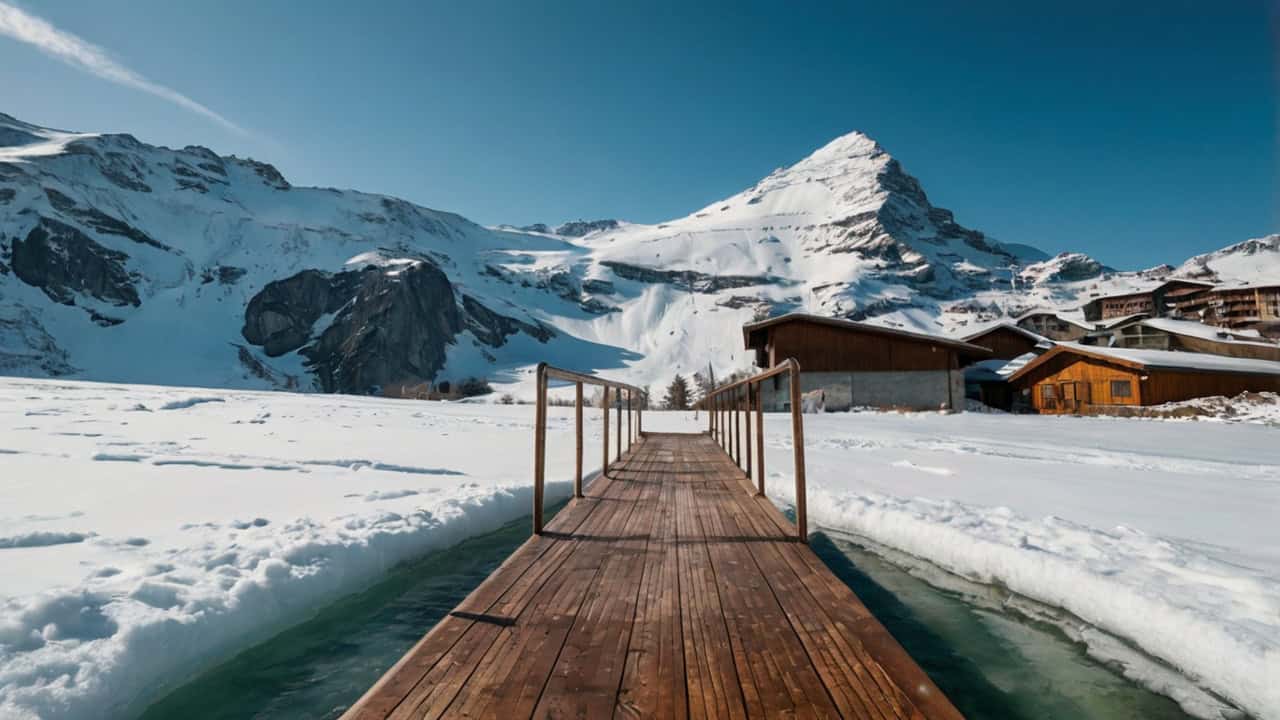
    Langenbruck, Switzerland – Think of the Swiss winter postcard. It is a world of crisp white silence, punctuated by the clanking of ski lift gears and the smell of fondue. For a century, this was the contract: the snow fell, the tourists came, and the village prospered.Now, picture the reality in the lower foothills of the Jura or the Prealps today. The hills are brown and green. The “T-bar” lift stands silent, its cables rusting in the January rain. The only sound is the wind moving through pine trees that are suffering from drought.

  • The Pit in Your Stomach: Why Your Daily Struggle Is Being Ignored in Stockholm

    The Pit in Your Stomach: Why Your Daily Struggle Is Being Ignored in Stockholm

    Hi, I’m Christine. I’m several things but for now I wear the writer cap, but right now, I want to talk to you-not as some expert on a distant TV panel-but as someone who sees the quiet, daily despair that has taken hold of Sweden.

    I want to talk to you, Lena, the single parent staring at an electricity bill that rivals your rent.

    I want to talk to you, Mikael, the skilled worker who just got laid off because of an AI program and now faces a job market that dismisses you because you’re over 50.

    You, the voiceless majority-the middle class watching your savings vanish, the poor and needy turning to food banks, the working mothers and fathers, the long-term sick, and those facing discrimination simply for your age, faith (like Christians), or background-your suffering is the unwritten story of Sweden today.

    The big news outlets treat politics like a game. They chatter about polls and party squabbles.

    They never mention the knot in your stomach. They don’t talk about the dread when the phone rings with another bill. They are silent about the quiet shame of choosing pills or groceries.

  • The Judas Coalition: The Sellout of the Working Class to Fund the Elite

    Are you furious about soaring mortgages and vanishing savings? You’re right to be. This isn’t just an economic slump; it’s a political betrayal orchestrated by the current Swedish government coalition.This book is your evidence. It is also a gift to you. Written in plain English by our writers, it cuts through the political noise and speaks directly to the voiceless majority-the single mothers, the sick, and the indebted middle class.What makes this book essential?It exposes the Tidö Agreement as a “Judas Bargain,” showing how the Sweden Democrats (SD) and Moderates (M) traded the working class’s financial stability for ideological power and tax cuts for the elite. The Debt Lie: We prove the 1,000 kr tax cut is an insult next to the 5,000 kr mortgage jump, turning you into a Debt-Prisoner. The Incompetence Tax: We detail how government paralysis and funding cuts are deliberately destroying your local schools and health services. The Solution: We provide the roadmap for the opposition to defeat the government by focusing on your rent, your food bill, and economic survival, not just political theory.This is the crucial difference: This book doesn’t cater to the media or the elite. It arms you with the facts necessary to turn your helplessness into political power.The time for silence is over. Read this book, understand the betrayal, and prepare to cast the rage vote!SEO Keywords: Swedish cost of living crisis, Tidö Agreement betrayal, Sweden mortgage debt, working class sellout, rage vote.