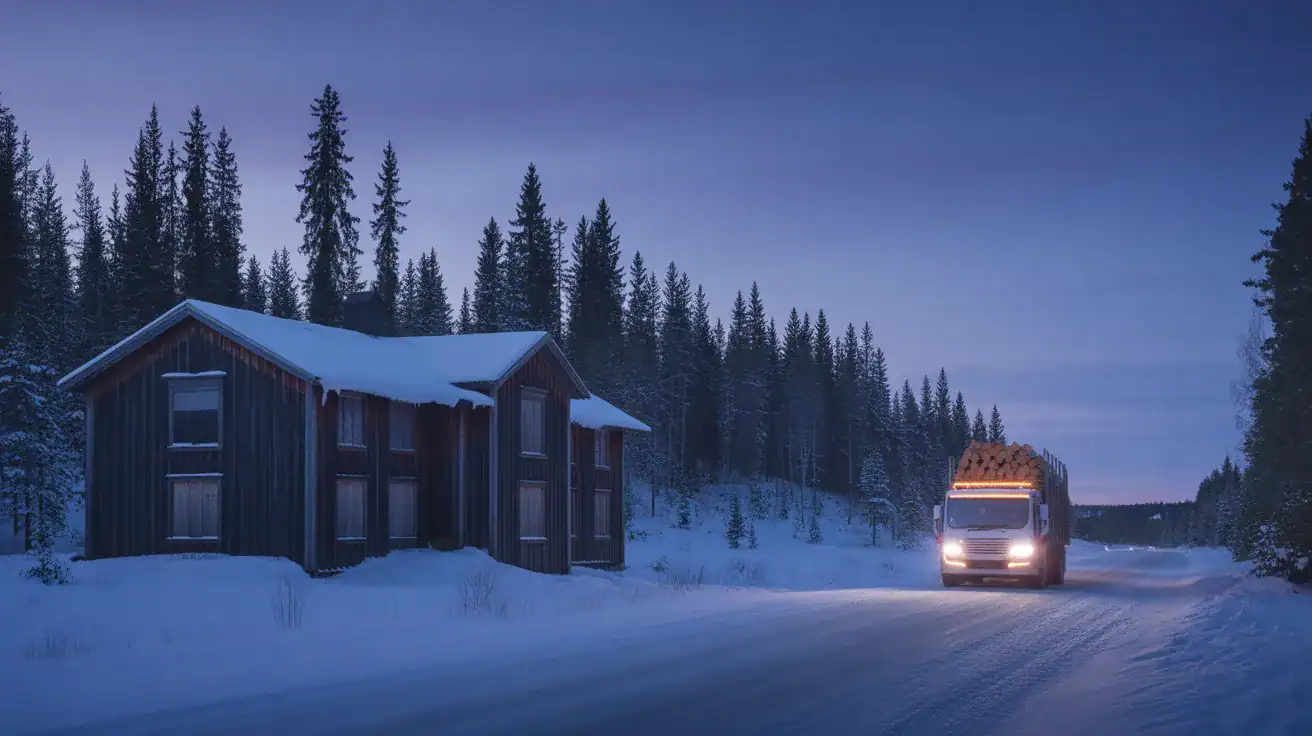
Rural Abandonment in Västerbotten.
The Silent NorthRural Abandonment in Västerbotten
Västerbotten, Sweden-You remember the old image of Northern Sweden. Busy forestry roads. Small sturdy villages. Every town had a police station. Every village had a school. The “folkhemmet”-the people’s home-stretched all the way to the Norwegian border.
Now look at the interior today. Roads are quiet. Except for huge logging trucks hauling timber to the coast. The village center windows are dark. The police station is ninety minutes away. The maternity ward closed years ago.
“Centralisering”
They have a name for this shift. Centralisering (Centralization). An economy built on gathering people and services in coastal cities. Saves money. For decades, everyone called it inevitable. It made cities efficient. It left the interior empty.
New analysis shows the result clearly. Västerbotten is now two different worlds. The booming coast. The dying interior.
How did a region rich in timber, hydropower, and minerals become a desert of public services?
The Numbers Tell The Story
Statistics Sweden data paints a clear picture of this retreat.
In 1970, the municipality of Åsele had over 5,000 residents. A functioning hub. Today? Fewer than 2,800. Same story in Sorsele. Dorotea. Malå.
The coastal city of Umeå grows fast. Aiming for 200,000 people. Meanwhile, the interior shrinks. But the drain isn’t just people. It’s money.
A WSP report shows that natural resources get pulled from the interior. But tax revenue lands elsewhere. Hydroelectric dams in the north produce a huge share of Sweden’s electricity. Yet the property tax from those dams goes mostly to the state in Stockholm. Not to local communities.
Simple version. The interior provides the engine’s fuel. The coast gets the mileage.
A Tale of Two Västerbottens
This isn’t just geography. It’s survival.
Meet Erik (Not his real name). Thirty-eight years old. Urban planner in Umeå. Designs “smart city” zones. His kids go to a school five minutes from home. He breaks a leg? The university hospital is a short bus ride away.”
Density creates innovation,” Erik says. “It’s expensive to keep pipes and roads working for three houses in the forest. People need to move where jobs are. It’s sustainable.”
Now meet Berit(Not his real name). Seventy-two years old. Lives outside Sorsele. Runs a small “service point.” A shop that also acts as pharmacy, post office, and Systembolaget agent. Last winter, power lines fell under heavy snow. Her village waited three days for help.”
They want the iron, the wood, the wind power,” Berit says. “But they don’t want the people who live here. When I call an ambulance, I count hours. Not minutes. We’re on our own.”
Erik and Berit live in the same county. But they live in different centuries of service. Erik lives in a modern welfare state. Berit lives on a frontier outpost.
The Government’s Answer: ‘The Green Transition’
The government sees a bright future. Calls it the “Green Industrial Transition.”
Billions of kronor pour into Northern Sweden. Green steel factories. Battery plants. The promise is that this “new industrialization” will save the North.
Critics look at the map. The factories sit on the coast. Skellefteå. Luleå. Boden.
For the interior, the “transition” looks different. More wind farms. More mines. Those need temporary workers, not families.
The government offers “digital solutions” to replace physical clinics. A doctor on an iPad instead of a doctor in the village.
Berit knows something. An iPad cannot set a broken bone. Cannot plow a road. The investment helps the GDP. It doesn’t keep the village school open.
The Public Feeling
People in the interior feel this abandonment. The SOM Institute at the University of Gothenburg tracks trust in society.
Their surveys consistently show a “trust gap.” Satisfaction with democracy and public services runs much lower in the rural north than in the urban south.
A majority of residents in these “shadow municipalities” feel national politicians don’t understand their reality.
Visceral feeling. You hear it at the local gas station. People see their rivers generating power for the south. Meanwhile, they pay some of the highest municipal taxes in the country. Just to keep snowplows running.
Back to the Two Pictures
So back to two pictures of the North.
Old picture. The whole country was meant to be lived in. The land’s resources supported the people on the land.
New picture. The North is a resource colony. A place to extract energy and materials. To support green cities on the coast.
The retreating services ask a simple question. Is the interior of Sweden for living? Or just for taking?
Snow falls in Sorsele. The silence gets louder.

Columnist & Expert
Euro Continental Dispatch
A dedicated contributor to Euro Continental Dispatch, specializing in investigative reporting and grassroots European perspectives. Committed to providing ground truth from across the Continent.