Lisbon’s housing market is breaking. Locals fight back with laws and spray paint.
Lisbon, Portugal – Think of Alfama ten years ago. A maze of shouting neighbors. Laundry hanging out windows.Grilled sardines smell. Loud. Crumbling.
Undeniably Portuguese. You lived there because your grandmother did.Now picture Alfama today. Laundry still hangs. But often it’s just a prop for Instagram.
Shouting got replaced by laptop clicks. Specialty coffee shops. Crumbling facades got smoothed over with white paint and smart locks.
Gentrificação Turística.
They have a name for this shift. Gentrificação Turística. Tourist gentrification. An economy built on selling a city’s vibe to people who don’t have to work in its local economy.
New data from early 2026 confirms what every local feels. Lisbon is now more expensive than Madrid.
But its wages match Eastern Europe. The city became a premium product its own citizens can’t afford.
How did Western Europe’s poorest capital turn into the most expensive playground for the global mobile class?
The Numbers Tell The Story
The math for Lisbon in 2026 is brutal.Idealista and National Statistics say the average net salary hovers around €1,273 per month.
Meanwhile, average rent for a one-bedroom in the city center passed €1,600.Simple math. Average worker would need 125 percent of their income just for rent.
The “Mais Habitação” laws from previous years tried to stop this. Limited new Airbnb licenses.
But damage was already done. Price-to-income ratio hit 21.1. One of the highest in the world. Investropa report says a typical family now needs over 20 years of total salary to buy a home.
The Nomad and The Neighbor
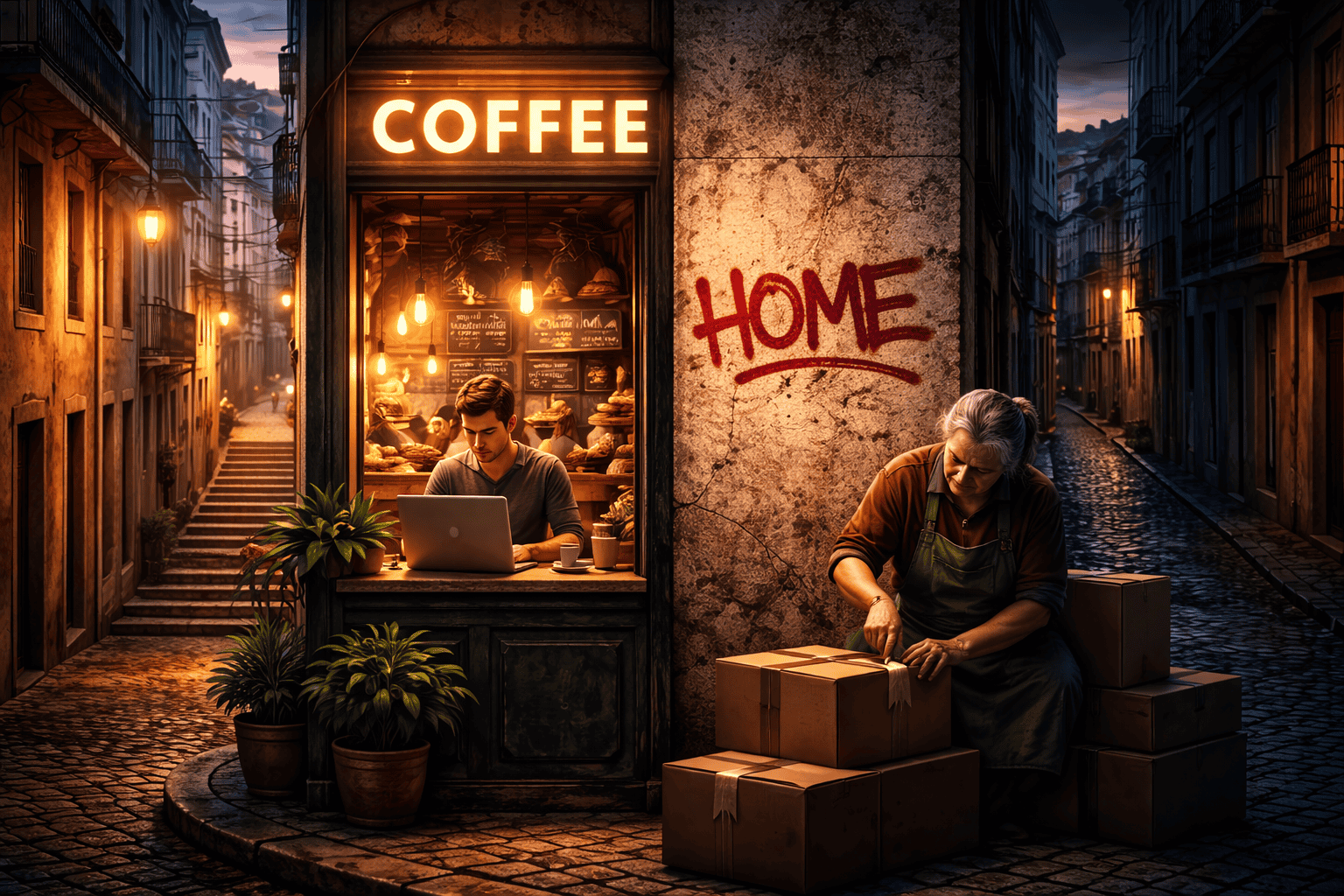
This isn’t just economics. It’s about neighborhood soul.Meet Juma(Not real name). Twenty-nine years old. Software developer from Nairobi, Kenya. Part of the new wave of global citizens. Earns a US salary. Lives in Lisbon’s sun.
He sits in a cafe in Graça typing code.”I love the energy here,” Juma says. Sips a €5 flat white. “It’s peaceful. Maisha marefu, you know? In Nairobi, the hustle is hard. Here I can breathe. I know locals are angry, but I contribute. I spend money here.”
Juma represents the dream. Freedom of movement. He speaks Kiswahili to friends on Zoom. Discusses where next. Maybe Bali. Maybe Mexico.
Now meet Maria (Not real name). Sixty-four years old. Lived in Graça her whole life. Last month her landlord sent an eviction notice.
Landlord is an investment fund based in Delaware. They want to renovate the building for luxury short-term stays.”They speak languages I don’t understand,” Maria says.
Gestures to the cafe where Juma sits. “They eat brunch while I count cents for bread.
I’m not living in Lisbon anymore. I’m living in the scenery of their vacation.”
Juma sees paradise. Maria sees a cage. Juma brings his pesa and his laptop.
Maria has only memories and a pension that hasn’t changed in a decade.
The Government’s Answer: ‘The Broken Tax Haven’
For years, Portugal courted people like Juma. NHR tax scheme. Flat 20 percent rate. Worked too well. The government tried to pivot. NHR is gone for new entrants. Replaced by stricter “IFICI” regime for scientific research. But market didn’t cool.
Demand from wealthy foreigners is infinite. Americans. Kenyans. Germans.Asians. Supply of houses is finite.The “Casa para Viver” movement says the government is addicted to foreign capital.
They fix the tax code. But they don’t build social housing. Promised 33,000 new public homes by 2030. In 2025, only 900 got finished in Lisbon.
The Public Feeling
Anger is written on walls.Walk through Mouraria or Arroios. You’ll see graffiti. “Alojamento Local = Morte Local.” Local accommodation equals local death. “Nomads Go Home.”
Expresso survey found 80 percent of Lisboetas feel the city prioritizes tourists over residents.
Sentiment shifts from hospitality to hostility. The warm Portuguese welcome is cooling down.Locals feel like extras in a movie directed by real estate funds.
Back to the Two Pictures
So back to the view from the Miradouro.
Old picture. Lisbon was a city of stone and salt. Owned by people who endured its hardships.
New picture. Lisbon is a subscription service. Pay your monthly fee. Get sun and pastel de nata. Get bored? Unsubscribe and leave.Juma packs his laptop. “Tutaonana baadaye,” he says to the barista. He might be here next year. Might not.
Maria packs her boxes. Has to be out by Friday. She won’t be back.
The tram rattles up the hill. Full of people. But none of them are going home.

Columnist & Expert
Euro Continental Dispatch
A dedicated contributor to Euro Continental Dispatch, specializing in investigative reporting and grassroots European perspectives. Committed to providing ground truth from across the Continent.