While everyone stares, the north’s energy networks are quietly falling apart. Aging tech. Geopolitical tension. Bad mix.
Visby, Gotland – Think about the Baltic Sea ten years back. People called it a “Sea of Peace.” A busy ferry highway. A quiet garden for wind farms.
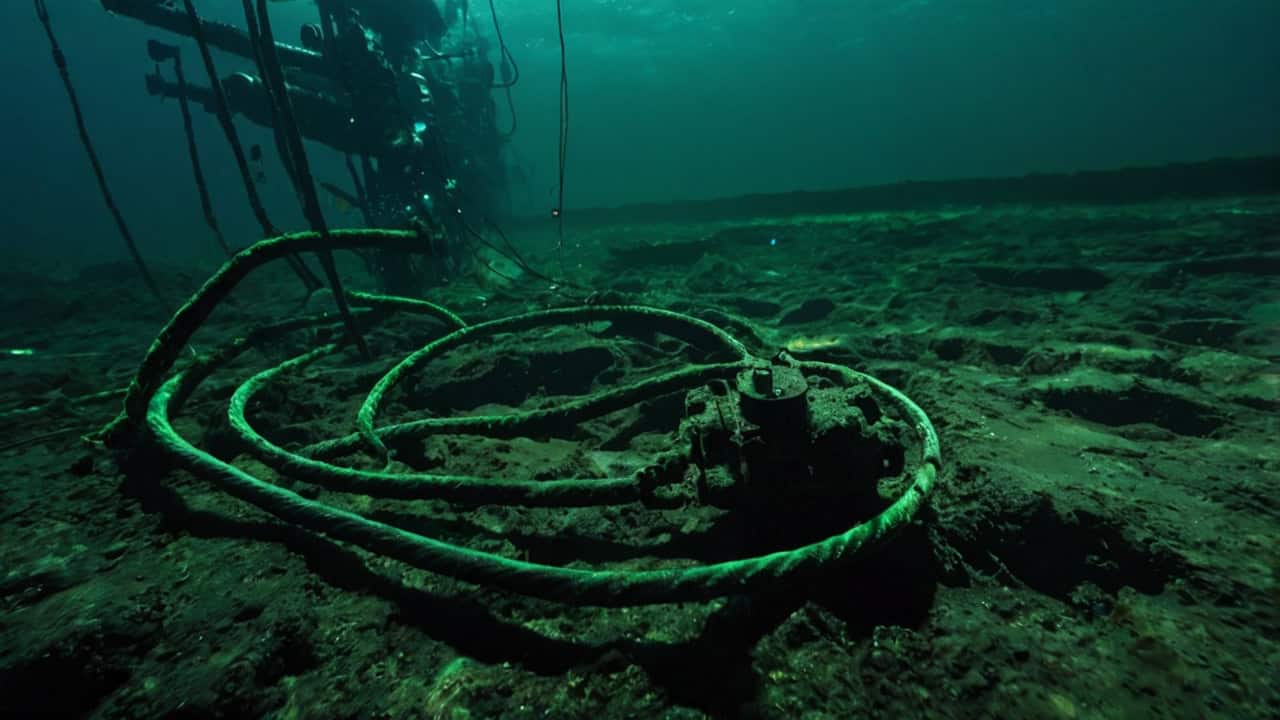
The cables on the seabed were boring. Just wires. They carried emails, money, electricity. Nobody gave them a second thought.
Now look at the Baltic today. A grey zone. “Dark ships” drift through the fog. Tankers with their transponders switched off.
The seabed has turned into a crime scene. Frigates patrol the horizon like sheepdogs. Those cables aren’t just wires anymore. They’re the most fragile arteries of the West.
They have a name for this shift. Hybridkrigföring. Hybrid warfare. A war with no declaration. Fought with anchors, not missiles.
New intelligence reveals a grim pattern. The world watches wars in the south. Meanwhile, the north quietly breaks.
Since 2022, over a dozen critical cables and pipelines have been cut. The infrastructure that keeps lights on in Sweden, Finland, and the Baltics is under attack.
How did the world’s most stable region become its most vulnerable flank?
The Numbers Tell The Story
The Swedish Defence Research Agency and NATO put out numbers. Alarming.
In late 2025 alone, the “Shadow Fleet” – aging tankers Russia uses to bypass sanctions – was linked to several cable severing incidents.
On Christmas Day 2025, the Eagle S dragged its anchor for miles. Cut the Estlink 2 power cable. Knocked out data connections.
But sabotage isn’t the only problem. Age is just as bad. Svenska Kraftnät says huge chunks of the Swedish grid are past their technical expiration date. Built for a different era.
Put those two facts together. A perfect storm. Old hardware. New enemies. A DNV report states that 65 percent of energy executives now see cyber threats and physical sabotage as their biggest risk.
Simple version. The hardware is rotting. And someone is waiting to cut whatever threads remain.
The Watcher and The Witness
This isn’t just military chess. It hits real people on the coast.
Meet Commander Lars (Not real name)
Lives on Gotland’s eastern coast. Runs a small server farm for local businesses. When the fiber optic cable to the mainland got damaged in January, her business went dark for two full days.
“We always looked east with worry,” Elina says. Staring at grey water. “But we thought soldiers would land on the beach.
We didn’t think they’d just turn us off from the bottom of the sea. I bought a diesel generator last week. In 2026. In Sweden. Feels absurd.”
Lars fights the war on a screen. Elina pays for it in silence.
The Government’s Answer: ‘Baltic Sentry’
Brussels and Stockholm launched “Baltic Sentry.” January 2026. A NATO operation. Naval drones. Surveillance aircraft. Frigates. All meant to “harden” the sea. Sweden promised billions to modernize the grid and bury more cables.
Critics call it security theater.
You can’t guard every inch of a 1.3 million kilometer network. A drone can watch a ship. It can’t stop an anchor from dropping in a storm. And the legal tools are weak. “Freedom of Navigation” laws let shadow ships sail right over critical assets.
Building a high-tech fence around a house with no locks on the doors.
The Public Feeling
Mood around the Baltic rim is shifting. From complacency to vigilance.
A Swedish Civil Contingencies Agency survey shows “fear of infrastructure collapse” has climbed into the top three concerns for households. Right up there with healthcare and crime.
People are prepping. Sales of “crisis boxes” – radios, water cans, camping stoves – have spiked. The prepping movement used to be for the paranoid. Now it’s mainstream.
Back to the Two Pictures
So back to the sea.
Old picture. The Baltic was a bridge. Connected East and West. Bound economies together with steel and fiber.
New picture. The Baltic is a moat. Dark. Cold. Full of hidden sharp edges.
The Shadow Fleet keeps sailing. The question for 2026 is simple.
Can a modern society survive when its lifelines lie exposed on the muddy floor of a hostile sea?

Columnist & Expert
Euro Continental Dispatch
A dedicated contributor to Euro Continental Dispatch, specializing in investigative reporting and grassroots European perspectives. Committed to providing ground truth from across the Continent.