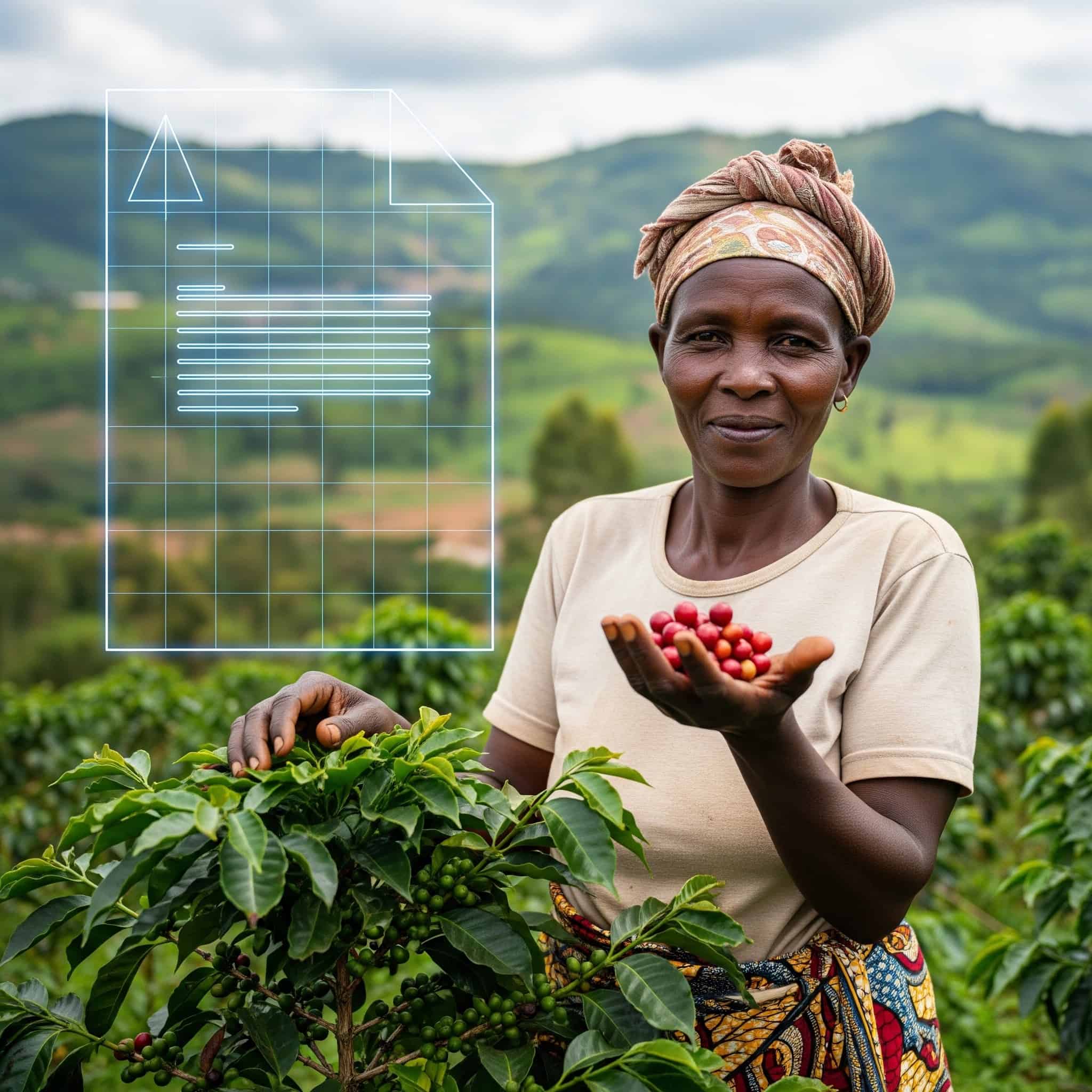
EUDR—The EU Deforestation Regulation comes into effect in 2026 and will be mandatory for small and medium enterprises.
The regulation will ensure European consumption doesn’t lead to the alleged loss of global forests. Commodities like coffee, cocoa, and palm oil must be deforestation-free. They must also follow the laws of the country where they’re grown.
Statistics and Facts: The Land Title Trap
The legality requirement. Previous certifications were voluntary. EUDR makes legal production a mandatory trade rule. The farmer must prove legal right to use the land.
Title deed deficit. Tanzania’s Land Act and Village Land Act give women equal rights on paper. Customary norms often override the law. Many women farm land owned by fathers, husbands, or brothers.
Systematic exclusion. EUDR needs a direct link between geolocation and the legal producer. No formal title? Excluded. Can’t sign due diligence statements that EU importers need.
Coffee is one of Tanzania’s top exports. Earns over $160 million annually. The EU is the primary destination for premium Kagera Arabica. If female smallholders are excluded, national export revenue drops.
The Breaking Point: 2026 and the Erasure of the African Woman Farmer
UN calls 2026 the International Year of the Woman Farmer.
But in the coffee highlands of Kagera, Tanzania, something quiet and devastating is happening. Global forums talk about empowering rural women. Meanwhile, the EU Deforestation Regulation is building a digital fence around the European market.
Tanzania. Women are over 67 per cent of farm labour. Yet they face the steepest climb to meet Brussels’ green requirements. EU high-tech environmental mandates hit traditional patriarchal land systems. Breaking point.
The land title trap isn’t just legal paperwork anymore. It’s a wall. Threatens to push thousands of women out of the global coffee chain. Turns their life’s work into illegal produce overnight.
The Widow Who Doesn’t ‘Exist’ on Paper
Lush rolling hills of Kagera. Mama Joy (not real name) has tended her two acres of Arabica coffee since the 1990s. For decades, her harvest paid for school fees. Home improvements.
Now, as the 2026 EUDR deadline for smallholders gets closer, her cooperative gave her bad news. Her coffee may soon be unsellable in Europe.
Not because of bean quality. Not because of tree health. But because of a piece of paper. To comply with EUDR, mama Joy needs two things. Exact GPS coordinates of her farm. And proof of legal production under Tanzanian law.
She has the coordinates. But the legal proof is a trap.
Her village follows local customs. Land is still registered in her late husband’s name. She’s farmed it for thirty years. But she holds no formal title deed in her own name.
Satellite in Brussels sees a deforestation-free success story.
EUDR auditor sees a legal ghost. No title deed matching her ID. Her coffee becomes non-compliant. Banished from the European market.
The Fact: EUDR and the Legal Identity Gap
EU Deforestation Regulation (EUDR). This regulation is mandatory for small and medium enterprises in 2026. Historic attempt to make sure Europe doesn’t drive forest loss elsewhere.
Products like coffee must be deforestation-free. They must also follow the laws of the country where they’re grown.
Here’s the gendered barrier.
Legality requirement. Old certifications were voluntary. EUDR makes legal production a mandatory trade rule. The farmer must prove legal right to the land.
Title deed deficit. Tanzania’s Land Act and Village Land Act give women equal rights on paper. But customary norms often override the law. Women farm land owned by fathers, husbands, and brothers.
Systematic exclusion. EUDR needs a direct link between geolocation and the legal producer. No formal title? Excluded. Can’t sign due diligence statements. EU importers won’t touch it.
The 2026 Deadline: A Crisis of Displacement
December 2026 deadline for smallholders. A land title trap triggers a de-risking wave. Global coffee buyers, scared of fines, narrow their supply chains to low-risk producers. Large estates. Male farmers with clear paper titles.
One of Tanzania’s top exports is coffee. They earn over $160 million every year. The EU is the primary destination for premium Kagera Arabica. Exclude women, and national revenue drops.
Poverty trap. Women like Mama Joy lose the EU market. Sell to secondary markets for much less. A green discount that punishes women for a land system they didn’t create and can’t easily change.
A Call to Action: Securing the First Mile
International Year of the Woman Farmer 2026. Want a legacy in Tanzania? Fix the land title trap. Fast. Gender-sensitive reform.
First, accept the right of occupancy alternatives. Lobby the EU. Accept letters from village councils. Customary rights of occupancy. Recognise women farmers even without formal state title deeds.
Second, mass land titling for women. Tanzanian government. EU Global Gateway support. Launch emergency first-mile titling. Mobile land clinics. Fast-track Certificates of Customary Right of Occupancy for women coffee farmers before the deadline.
Third, data sovereignty for cooperatives. Empower AMCOS. Let them hold master titles or collective legality certifications. Cover all members. Shield individual women from personal land audits.
The Breaking Point: A Choice for 2026
Breaking point. The EU wants a clean supply chain. Noble. But implemented without looking at patriarchal land realities in the Global South? Becomes a tool of dispossession.
We can’t let the green transition become a male transition. We can’t celebrate the woman farmer with one hand while a bureaucrat in Brussels signs away her livelihood with the other.
Authentic partnership means deforestation-free doesn’t mean woman-free. Bridge the gap between land and deed. Otherwise, the EUDR stays a trap. Catches the very people it should protect.
Columnist & Expert
Christine Afandi A.
Christine Afandi A. does a bunch of things. Writes. Tells stories. Connects East Africa and the Nordics. She's been at this a while. Wrote for papers back home. The Guardian in Tanzania. Daily Nation. The EastAfrican. Covered politics, culture, development. How they all tangle together. Had a column in Norway too. Panorama Nyheter. Became a voice people turned to for African-Nordic stuff. She also writes books for kids. In Kiswahili. Ziara kwa Nyanya. Mcheza Karata. Schools use them. Helps kids read. Keeps culture close. Based in Sweden now. Got two degrees from Örebro University. MSc in Informatics. MA in Global Journalism. When she's not walking those quiet northern streets or teaching herself German, she's meditating. Writing poems. Working on a YA thriller series. Set in Scandinavia. She builds bridges with words. Keeps home's rhythm alive for people spread all over. Can be reached at: Email - chriswildflower@proton.me