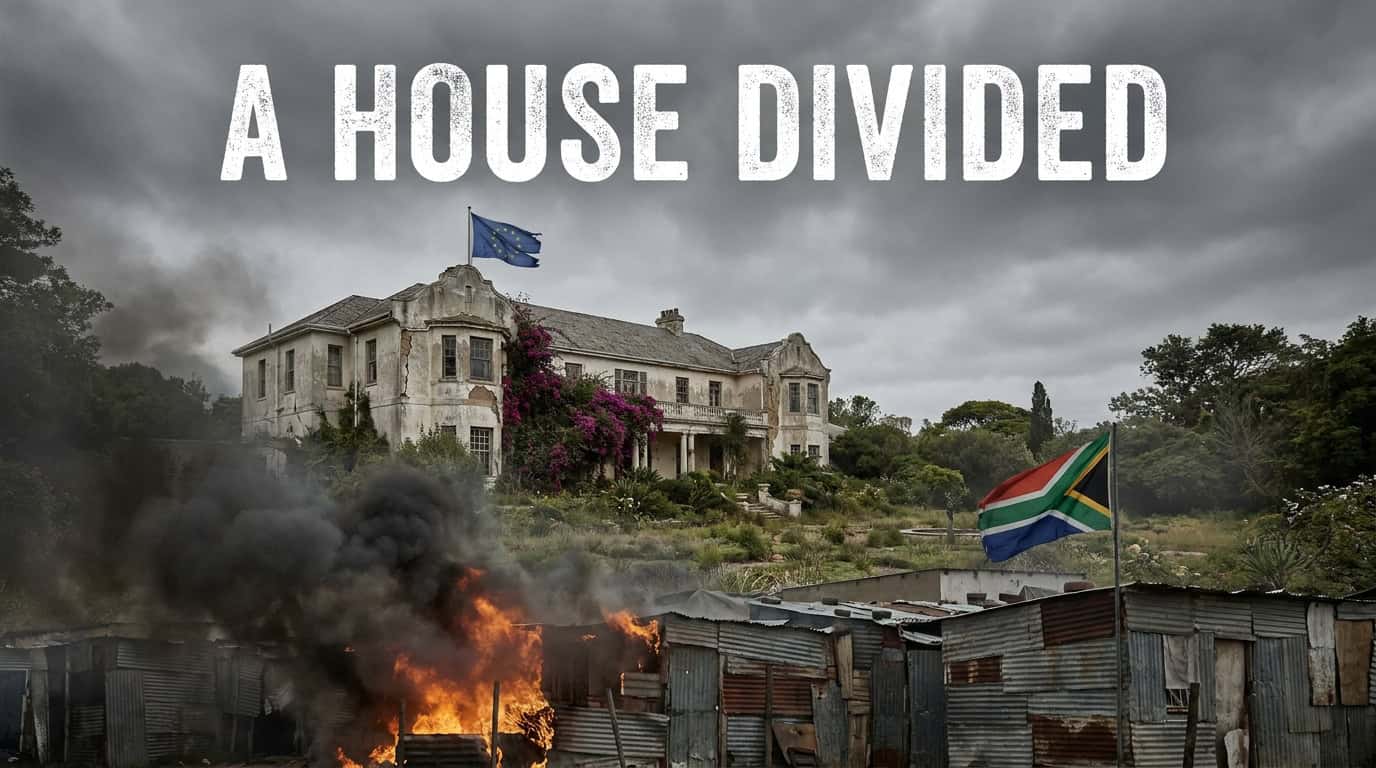
Let me tell you about the house that history built. About South Africa, the current crisis and Peter Abrahams and Nadine Gordimer.
Two of many writers whose work that I read many years ago reminds me of the currently resurfaced turmoil in South Africa that Europe pretends not to see!
‘It must be a hard thing to be a man in the city’ echoes as one of the themes (if not major theme) in Peter Abraham’s novel The Mine Boy published in 1946.He was a brilliant writer. Born in 1919. In Vrededorp.
Today Abrahams would have observed ‘it must be a hard thing to be a ‘foreigner’; not just in a city in South Africa but in cities in Europe, USA and the world at large’.
That’s the whole setup right there playing out in 2026.
Peter Abrahams was a journalist. A novelist. A man who watched how the machine worked in apartheid South Africa era. It was not to build community. It was to extract profit.
He saw the mines. The gold. The diamonds. All that wealth pulled from the South African ground. And he saw where it went-north. Across the Atlantic. To London. To Amsterdam e.t.c.
The English. The Dutch. Their capital built those tunnels in South Africa. Their banks financed the digging. And the Black men? They were tools. Temporary. Useful until they broke. Then discarded.
Abrahams understood something simple: The system wasn’t built for the community. It was built for extraction. I repeat, for profit!
The book Mine Boy is about survival. I read it in a sitting. Re-read it several times after. It’s about young and not so young black mine workers(from indigenous South Africans and other neighbouring nations) finding each other in the city.
Building solidarity. Keeping their humanity intact despite everything. It’s a portrait of resistance.
Peter Abrahams had to leave eventually. But the blueprint stayed behind.
Then there’s Nadine Gordimer.
Born 1923. Springs, South Africa. Privileged. Middle-class. Jewish family.
Gordimer could have looked away. Plenty did.
Instead, she became the conscience of a nation. Wrote novels that cut through the lies. Challenged racism. The segregation. The whole rotten apparatchik in the then regime.
The Swedish Academy gave her The Nobel prize in 1991. Said her work was “of very great benefit to humanity.” High praise. But she didn’t write for prizes. She wrote because silence felt like complicity.
She knew what Peter Abrahams knew. Just from a different angle. Different skin. Different starting points.
Same conclusion.
In 1974, Gordimer published The Conservationist.
It’s about a white industrialist named Mehring. Wealthy. Detached. Buys a farm in the Transvaal in South Africa. A tax hedge. A weekend escape.
Then they find a body on his land. An unidentified black man. Buried carelessly. Left there.
Mehring tries to ignore it. But the body keeps surfacing. Floods uncover it. The earth pushes it back up. Again and again. Nature won’t let it stay hidden.
The land becomes a character in that book. For Mehring, it’s a commodity. Something to own. To manage. To conserve for profit.
But the novel suggests something else. The land will reject his ownership. The spirit of the people buried in it-they will reclaim what was taken.
Mehring is hollow inside. Alienated from his son. From his lover. From the black workers who actually understand the rhythms of the farm. He conserves his wealth. His status. His lifestyle. But he’s bankrupt where it matters.
The buried body is a symbol. It represents the truth that apartheid tried to bury. The history it tried to erase. The humanity it tried to ignore.The truth keeps surfacing.
Now look at the headlines.
Migrants chased through townships. Shops set on fire. Nigerian owners. Zimbabwean owners. Their goods were stolen. Their livelihoods turned to ash.
The pretext? Illegal immigrants.
But watch closely. It’s not just about papers. Legal residents get caught up, too. Citizens from other African countries who’ve built lives here. Opened shops. Employed locals. Paid taxes.
Doesn’t matter. They’re foreign. They’re different. They’re targets.
Sound familiar?
People fight over land. Over property. Over who belongs and who doesn’t. They grab what others built. What others paid for. What others created from nothing.
You might think this is new. It isn’t. This is the last act of a very old play. The wealth went north. The rot stayed here.
And now the people who built the world’s fortune are fighting each other in the ruins.
Meanwhile, those who profited sit comfortably. Brussels. London. Amsterdam e.t.c.
Here’s the hard part.
History follows you home. Even when you don’t invite it.
Much of Europe’s comfort-the banks, the infrastructure, the nice life-came from that South African ground. North and West Europe also benefited from other nations too that were plundered as evidenced by entities then like the Dutch East Indies Company among others of that calibre!
From South Africa came ships with goodies. The gold. The diamonds. Pulled out by men who were paid almost nothing. Died in the tunnels. Went home to nothing.
If your European grandfather or father or government built an empire on those resources? You’re living in a house built on that money.
That’s not guilt. That’s just math. Honest math.
You have a right to know: Your comfort today is linked to the current instability in South Africa the summer of 2026!
Picture a shebeen.
End of a long shift. Men gather in a small room. Hidden. Township darkness. They share a drink. They breathe. For a moment, they feel human again.
Colonial authorities hated that.
They knew that a united group is dangerous.
So they used the old trick. Divide and rule.
They paid informers to spy on friends. Whispered lies. Made the man from Lesotho look at the man from Mozambique and see a rival. Not a brother. Made the local South African suspicious of both.
They wanted us to fight over crumbs. So we’d never look up and see who held the keys.
That fear? That suspicion? That “us versus them” instinct?
It didn’t vanish when the laws changed.
It went underground.
Now you see it in the townships. A mob turns on a Nigerian shopkeeper. A Zimbabwean trader. They’re not acting on a new thought.
They’re reading a script written a century ago.
The year 1994.
Everyone treats 1994 as the year South Africa finally saw the light. A year a door finally closed. And a new chapter opened.
It didn’t.
More like a window. Left open a crack. Just enough to let air in. Not enough to change the room.
We changed the flags. The banks stayed the same. The mines stayed the same. The structures that kept the majority poor and separate? They were never dismantled.
Gordimer wrote about a buried body that wouldn’t stay buried. That’s what we’re seeing now. The history that was suppressed. The land that was stolen. The dignity that was denied. It’s all coming back up. Not in a neat way. In a messy way. In fires and mobs and desperation.
Brussels talks a lot about human rights. Lovely speeches. Great press releases.
But you can’t claim to support human rights in Africa while ignoring that the economic structure you set up is destroying those rights today.
Kind of hypocritical though, right?
You can’t just wave that off. History doesn’t vanish because you stop looking at it.
So what now?
Restorative Investment is the Keyword
We’re not asking for charity. Charity is for bad luck.
This is about a debt.
Brussels needs to move beyond aid. Aid is often just a polite word for scraps. Keep us quiet. Throw us a little.
We need restorative investment. Fund schools. Infrastructure. Projects that finally give young South Africans a path that doesn’t involve fighting their neighbours for scraps.
This is about closing the circle.
The colonial era opened something. And it never actually closed.
A door was supposedly shut in 1994… Really a door slammed shut as people talk about it?
It wasn’t. It was a window left cracked.
And look-this isn’t about guilt or ‘embarrassing’ others…
But somehow ( I know ) that’s how it reads to some people. They assume you’re supposed to carry something heavy.
That’s not what I’m implying.
If human rights are real to you-if they mean anything-then you start where the damage was done. You fix that house. Your people built it. And it’s still standing.
Before the whole thing goes up in flames.
Peter Abrahams. Nadine Gordimer.
Two writers. Different lives. Different angles.
Abrahams wrote about workers finding each other. About survival through solidarity. About the dignity that can’t be crushed.
Gordimer wrote about a man who owned everything and had nothing. About a buried truth that wouldn’t stay buried. About land that ultimately belongs to those who live on it, not those who buy it.
Same truth. Two sides.
If they were alive today, they’d recognize those burning streets instantly.
Peter Abrahams would see the solidarity that’s been broken.
While Nadine Gordimer would see the buried truth surfacing in fire.
They’d ask the leaders in Brussels one question.
How long will you watch from across the Atlantic while the people you divided continue to destroy themselves? It’s hard to be human when you’re taught to hate your neighbour!
The only way to stop the fire? Acknowledge we’re on the same side.
Close the circle.
In addition, pay the debt.
Act before the humanity we all share is burned away completely!!!
This is a piece written for all truth seekers and the person in Brussels, London, Amsterdam, or Europe. Someone who might not know the history but is ready to listen if the story is told clearly. Opinion is the author’s unless otherwise stated!
Columnist & Expert
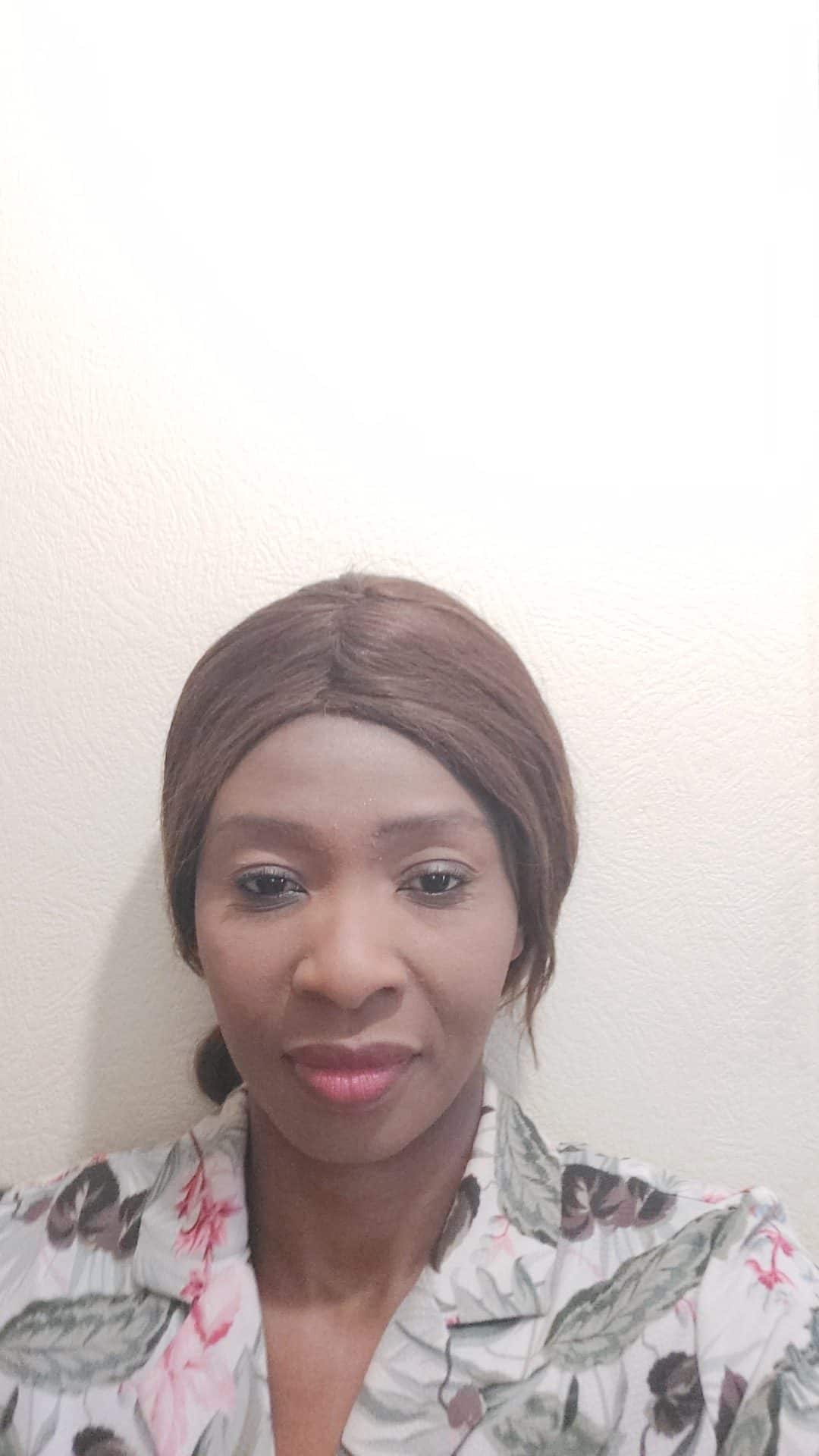
Christine Afandi A.
Christine Afandi A. does a bunch of things. Writes. Tells stories. Connects East Africa and the Nordics. She's been at this a while. Wrote for papers back home. The Guardian in Tanzania. Daily Nation. The EastAfrican. Covered politics, culture, development. How they all tangle together. Had a column in Norway too. Panorama Nyheter. Became a voice people turned to for African-Nordic stuff. She also writes books for kids. In Kiswahili. Ziara kwa Nyanya. Mcheza Karata. Schools use them. Helps kids read. Keeps culture close. Based in Sweden now. Got two degrees from Örebro University. MSc in Informatics. MA in Global Journalism. When she's not walking those quiet northern streets or teaching herself German, she's meditating. Writing poems. Working on a YA thriller series. Set in Scandinavia. She builds bridges with words. Keeps home's rhythm alive for people spread all over. Can be reached at: Email - chriswildflower@proton.me